Mold Removal in Saratoga Springs, UT
Saratoga Springs runs eleven miles along the northwest shore of Utah Lake at about 4,550 feet, with the Jordan River on its east edge and the Lake Mountains behind it. It incorporated at the end of 1997 with fewer than 200 people, had about 1,000 in 2000, and passed 70,000 by the mid-2020s. Almost every home is a stucco-and-stone two-story from the 2000s or later with a full basement, and almost every basement sits on lakebed clay a few feet above the water table.
That clay is the problem. It takes water slowly and gives it back slowly, so the ground stays saturated for weeks after the melt and pushes against foundation walls long after the snow is gone. The lake itself peaked in 1984 after the 1983 floods and has stayed within a few feet of that line since. The foothills add another risk: on September 1, 2012, after the Dump Fire burned the slopes that June, an inch of rain in twenty minutes sent mud four to five feet deep into basements around Jacobs Ranch and the golf course.
A call to this site connects a Saratoga Springs homeowner with an independent mold provider working in the area. The provider inspects and quotes; this site never touches the work.
Saratoga Springs mold removal, clay soil and sump pumps
A sump pump that quit during the melt and a family room carpet that squished a week later is the classic basement mold remediation call here, and the pad under that carpet is where the growth is. A basement that smells every May and clears by summer is mold odor removal until the crew reads the slab, and then the sump and the drainage become part of the scope. After removal, mold damage repair on these lots often means hard flooring over a moisture barrier instead of new carpet.
Where to call in Saratoga Springs
The Saratoga Springs Planning and Zoning Department holds the master plans and the land-use code for the subdivisions that cover the old lakebed, which is where to start if you want to know what was under your lot before the house. The Saratoga Springs Library on Saratoga Road is in the same civic complex as the public utilities office that handles the city's water and storm systems.
Call (385) 534-4662 to be connected with a local mold provider serving Saratoga Springs.
Services Available in Saratoga Springs
Mold Removal
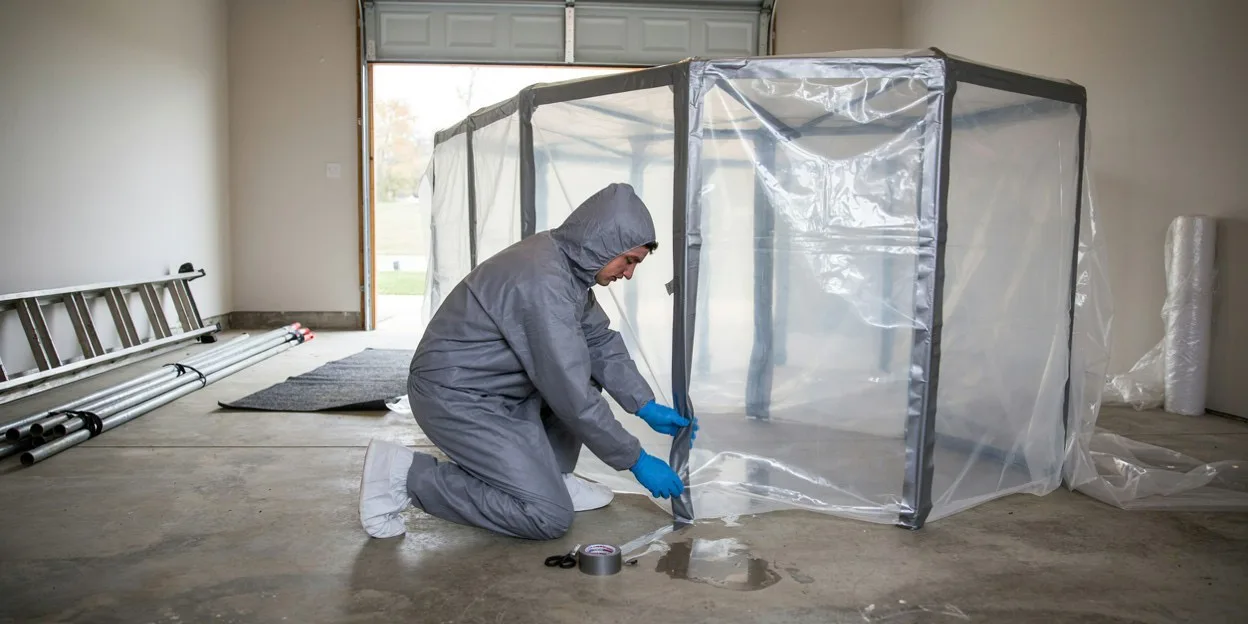
Containment, negative air, and removal of the wet drywall, carpet pad, and insulation that grew it, then cleaning and drying what stays.
Black Mold Removal
Dark growth handled under full containment with protective gear. Color does not name the species, and the work does not change because of it.
Basement Mold Remediation
Finished basements that took water from a window well, a seep, a sump, or a burst line, opened, cleared, and dried to the foundation.
Whole-Home Mold Remediation
Room-by-room containment and removal after a long leak, a winter pipe burst in an empty house, or a basement that flooded more than once.
Bathroom Mold Removal
Growth on ceilings, behind vanities, and inside walls from steam, a slow supply leak, or a fan that vents into the attic.
HVAC Mold Cleaning
Furnace cabinet, coil, humidifier, and duct cleaning when the smell comes with the blower, plus swamp-cooler pads and pans on older homes.
Mold Odor Removal
Finding and removing the wet material behind a musty smell in a basement or crawl space, then clearing the air instead of covering it.
Mold Damage Repair
Drywall, baseboard, insulation, and subfloor put back after removal, with the wall read dry before anything closes.